

Emergency lift repair, 24 hours a day
A person answers. Entrapments come first.
Round the clock, on every make of lift, whether or not we look after it. Ring 0800 999 1042, tell us what the lift is doing and whether anybody is inside, and we take it from there.
Somebody trapped in a lift right now?
Call 0800 999 1042Answered 24 hours a day. Entrapments first, whoever looks after the lift.
- 1
If anybody inside is unwell, injured or in danger, ring 999 first.
- 2
Then ring us on 0800 999 1042. Say somebody is trapped, and give us the address and which lift.
- 3
Talk to them through the doors and tell them help is on its way. A lift that has stopped is usually the safest place for them to wait.
- 4
Do not force the doors or try to move the lift. Getting people out is a job for a trained lift engineer or the fire and rescue service.
- 5
Keep everybody else away from the lift until we arrive.









- Independent, every make
- Family run
- 24/7 emergency call outs
- SafeContractor approved
- Cyber Essentials certified
- NVQ qualified engineers
Lift stopped, nobody inside?
Leave your number and what the lift is doing, and we will ring you back. If somebody is trapped, ring 0800 999 1042 instead.
Breakdowns do not keep office hours, so neither do we.
Entrapments go to the front of the queue, whoever looks after the lift. After that, contract customers come first, which is only fair to the buildings that pay for cover all year round.
When a lift stops, you need a person on the phone, not a menu. Ours is answered 24 hours a day across Worcestershire, Gloucestershire, Herefordshire, Shropshire and the West Midlands, including Birmingham, for passenger lifts, goods lifts, platform lifts and dumbwaiters of every make. Our head office is at Martin Hussingtree, just north of Worcester, with engineers across the Midlands and the South.
You do not need a contract with us to ring. Most of the lifts we are called out to were installed by somebody else, and plenty are looked after by another company. We will tell you honestly on the phone when we can be with you, rather than printing a promise on a web page.
This page is about the call out itself: what happens when you ring, and what to do while you wait. If your lift is running but misbehaving, with doors that will not close, a step at the landing or a lift that keeps tripping out, see lift repairs, where we go through the faults we see most.

Barriers, signage and safe isolation in place before any work starts.
What happens, from the moment you ring.
One situation, start to finish: a lift stopped between floors with somebody inside. Watch the lift. It stays exactly where it stopped until an engineer brings it level, which is how it should be.
-
A person answers
Not a call centre and not a voicemail. You get somebody who knows lifts, day or night, and the first thing they ask is whether anybody is inside.
-
The questions that matter
Where the building is and which lift. Whether anyone is trapped, and whether anyone inside is unwell, elderly, very young or frightened. What the lift was doing when it stopped. How our engineer gets in: keys, access codes and a name on site. Getting this right on the phone saves time at the door.
-
An engineer is sent, and you are told when
Entrapments go to the front of the queue, whoever looks after the lift. We tell you honestly when an engineer will reach you, based on where they are and where you are, rather than a number that sounds good on a website.
-
Made safe before anything moves
The first job on site is isolation: the lift made safe at the controller, the area barriered off, and a check that the car is stationary and secure. Nobody inside is moved until that is done.
-
The car brought level
The engineer brings the car to the nearest landing under control. On a traction lift that is done from the machine room or the rescue panel; on a hydraulic lift, with the emergency lowering valve. This is the step that must never be improvised by somebody who is not trained on that lift.
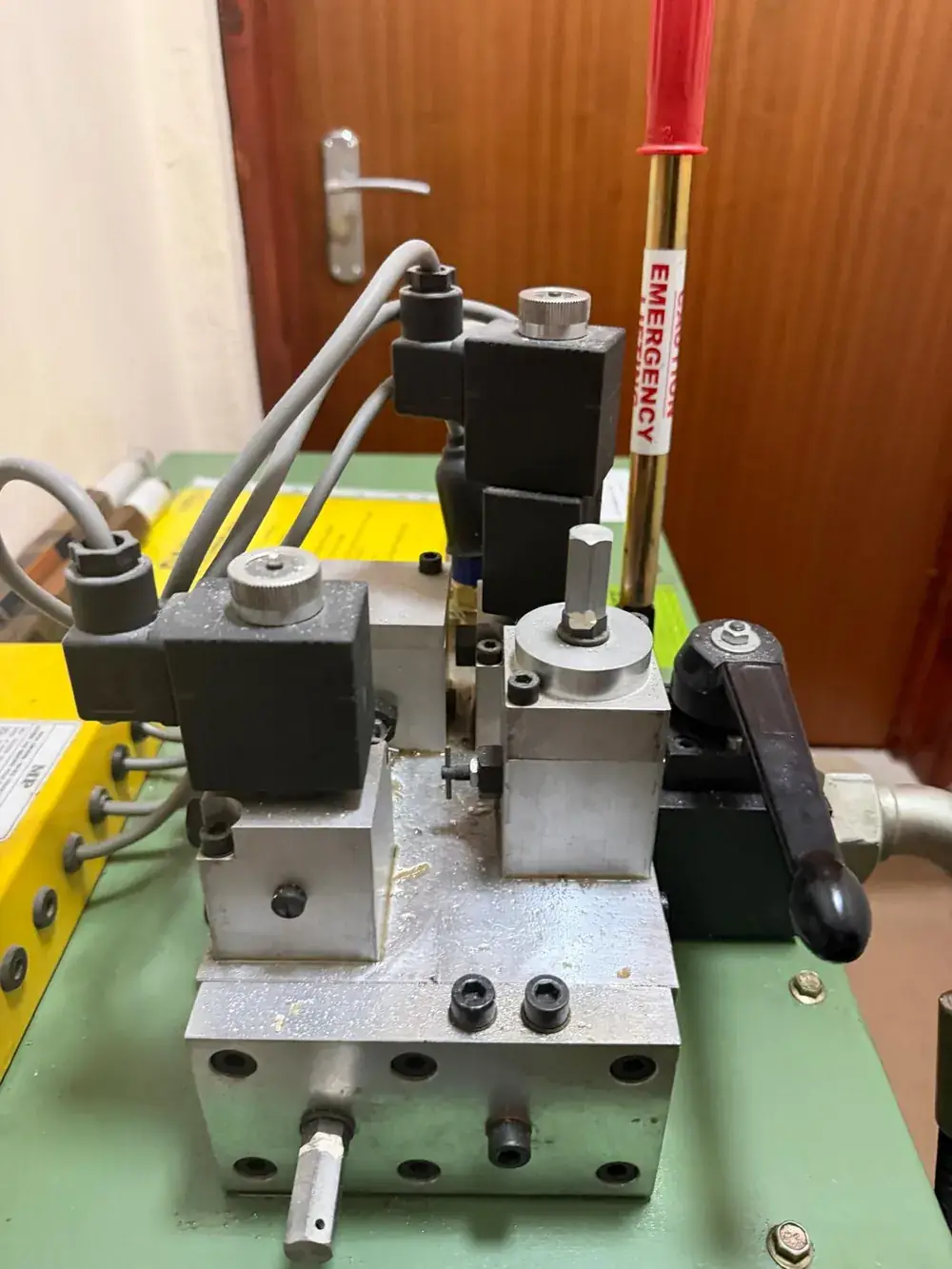
A hydraulic power unit with its emergency lowering lever. In trained hands, this is how a stopped car comes down to a landing.
-
Doors open, everyone out
The landing and car doors are opened together at the floor, and whoever was inside steps out onto level ground. The lift then stays out of service while we find out why it stopped.
-
Fixed, or left safe
Most call outs are put right on the visit. Where a part has to come, or the fault is not safe to leave running, the lift stays out of service and we tell you what the part is, what it costs and when it will be here.
The lift has stopped between the ground and first floor.
Nobody trapped, but the lift has stopped? Ring us anyway.
A lift breakdown with nobody inside is still worth ringing about now, day or night. We will tell you honestly when we can get there.
24 hour call outs · every make · 5.0
When to ring 999, and when to ring us.
Ring 999 first if
- Anybody inside is unwell or injured
- Anybody is in danger
Then ring us as well, so an engineer is on the way.
Ring us if
- People are stuck, but safe
- The lift has stopped with nobody inside
- It is running, but not as it should
Most people trapped in a lift are frightened rather than in danger. A car that has stopped is holding them safely, and the real risk comes from well-meant attempts to get them out: forcing the doors, climbing out between floors, or somebody who once watched it done trying to move the lift.
Where nobody is in danger, getting people out of a stuck lift is the building owner's responsibility rather than the fire service's. London Fire Brigade says so plainly, and several fire and rescue services, Gloucestershire's among them, can charge building owners for repeat non-emergency lift releases.
In a building where the lift is used at work, LOLER requires it to be arranged so that anybody trapped in it can be freed. In practice that means an alarm in the car that reaches somebody day and night, and a lift company who will come. If you are not sure where your lift's alarm button actually rings, it is worth finding out before the day you need it.
After the call out, stopping it happening again.
A lift that has stranded somebody once will usually do it again unless the cause is found. Very often it is something that had been wearing for months: door gear, a contactor, low oil on a hydraulic lift, or a safety circuit doing its job after a levelling fault.
That is what a planned maintenance contract is for, and it is usually cheaper than the call outs it replaces. Where an older lift keeps throwing up the same faults, modernising the controller and door gear is often the answer that ends them.
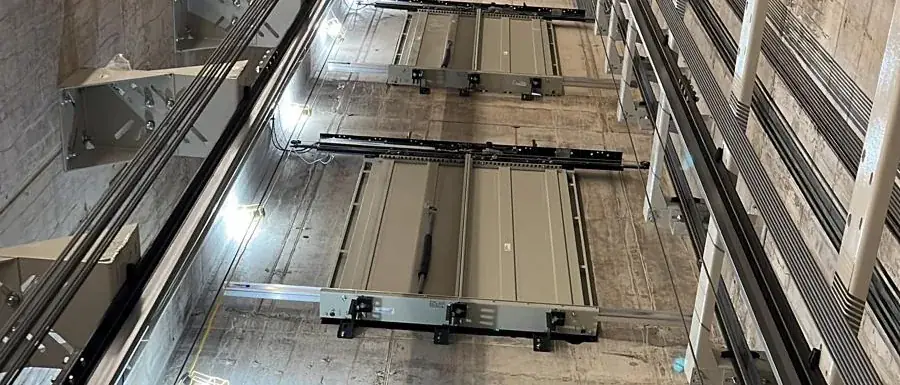
Looking up a passenger lift shaft: guide rails, door gear and landing entrances, where a call out actually happens.
Emergency lift repair questions, answered
Someone is stuck in our lift. What do we do?
If anybody is unwell, injured or in danger, ring 999 first. Then ring us on 0800 999 1042, say there is an entrapment, and give us the address and which lift. Talk to the people inside through the doors and tell them help is coming; a lift that has stopped is usually the safest place for them to wait. Do not force the doors or try to move the lift unless you are trained and authorised on that lift. Entrapments go to the front of our queue, whoever maintains the lift.
Do you attend at night and at weekends?
Yes. The call out line is answered 24 hours a day, seven days a week. The office keeps normal hours; the call out line does not.
How quickly can you get to us?
It depends on where you are and where our nearest engineer is when you ring, and we would rather tell you honestly on the phone than print a number here. Entrapments always come first. After that, contract customers come ahead of one-off call outs, which is only fair to the buildings that pay for cover all year round.
Will you come out to a lift you do not maintain?
Yes. You do not need a contract with us. We work on every make, including Otis, KONE, Schindler, Stannah, ThyssenKrupp and Orona, and older lifts from companies that no longer trade. Most of the lifts we are called out to were installed by somebody else.
Will you fix it on the first visit?
Often, but we will not promise it. Most call outs are put right on the visit. Where a part has to be ordered, or the lift is not safe to leave running, we leave it out of service and tell you what it needs, what it costs and when the part will arrive.
Should we ring the fire brigade?
If anyone is unwell, injured or in danger, yes: ring 999 straight away. If people are simply stuck and safe, ring your lift company. Where nobody is at risk, getting trapped passengers out is the building owner's responsibility, and some fire and rescue services charge building owners for repeat non-emergency lift releases.
What should we have ready when we ring?
The address and which lift it is, whether anybody is inside and whether any of them are vulnerable, what the lift was doing when it stopped, and how our engineer gets in: keys, access codes and a name on site. If the lift has a display, tell us what it shows.
Lift stopped? Ring 0800 999 1042.
A person answers, day or night. Entrapments first, every make, across Worcestershire, Gloucestershire, Herefordshire, Shropshire and the West Midlands.