
How cold weather affects the performance of your hydraulic lift
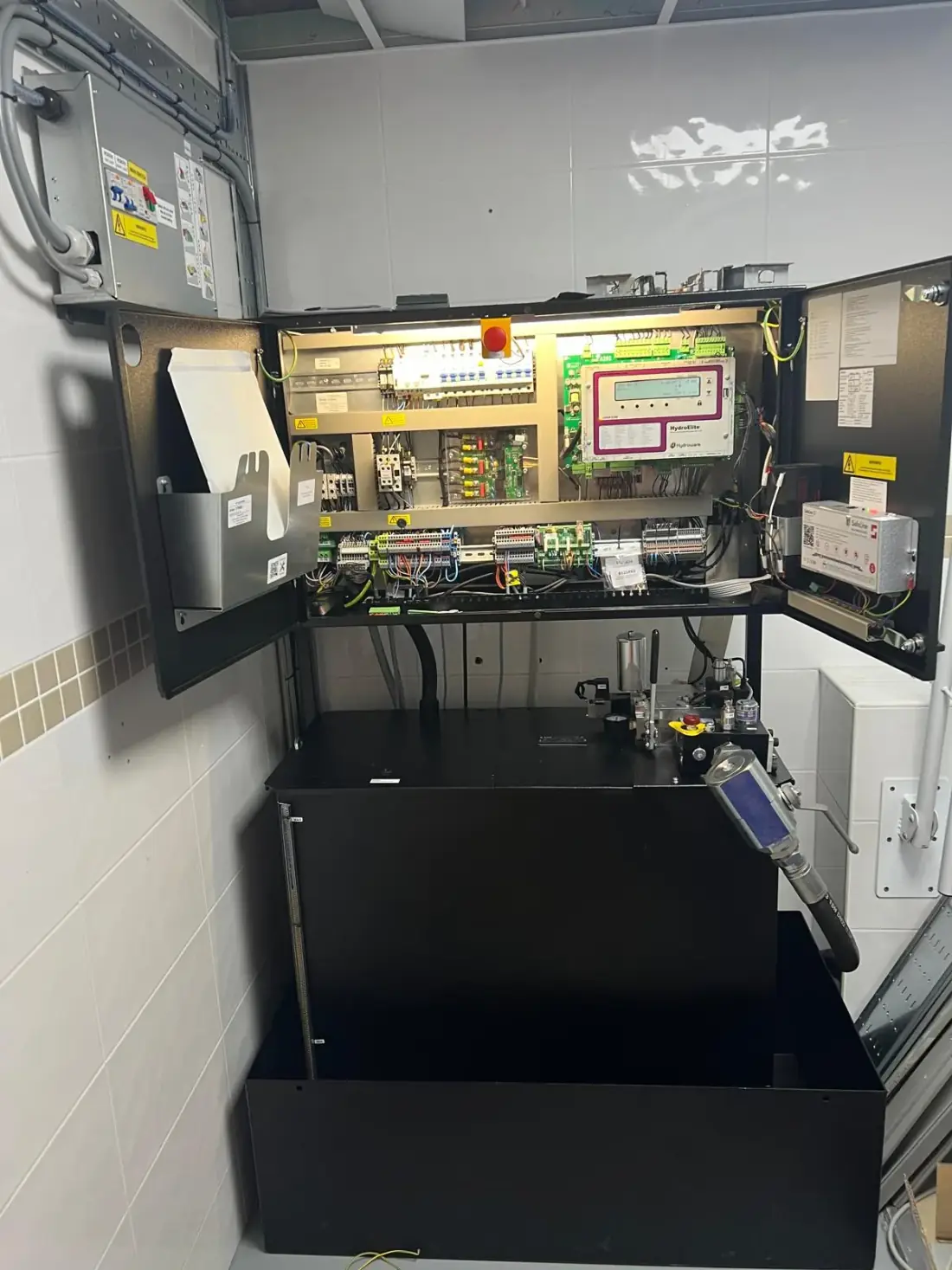
The first cold morning of the year brings its own set of calls. The lift worked perfectly yesterday afternoon, and now the first trip of the day is slow, the car stops short of the floor, or it will not go at all. Nine times out of ten it is a hydraulic lift, and the cause is the oil.
Why hydraulic lifts feel the cold
A hydraulic lift is raised by oil. A pump pushes it into a cylinder, the ram extends and the car goes up. To come down, a valve lets the oil flow back to the tank. The whole ride depends on that oil moving at the rate the valve was set up for.
Hydraulic oil thickens as it cools. It will not freeze in a British winter, but in an unheated machine room overnight it can become a lot thicker than it is on a normal working afternoon. Thick oil moves slowly through the pump and the valve, and the lift behaves accordingly.
The signs to watch for
- A slow first trip. The car takes longer to get moving and travels more slowly on the first few runs of the morning, then picks up as the oil warms.
- Stopping short of the floor. The valve is timed for oil at its working temperature. Cold oil stops the car early, leaving a step at the landing, and the lift may need to re-level.
- Harsh starts and stops. The ride loses its smoothness until the system warms through.
- The lift tripping out. A pump working against thick oil draws more current and runs hotter. That can trip the motor protection and take the lift out of service.
- More noise from the power unit. A pump labouring against cold oil often sounds different. As always with lifts, a change in the sound is the thing to notice.
None of these means the lift is unsafe. They mean it is working outside the conditions it was set up for, and most of them are avoidable.
The machine room is half the story
Lift equipment is designed for a machine room kept between 5 and 40 degrees. Plenty of hydraulic power units sit in rooms that drop well below that on a winter night: a cabinet on an outside wall, a plant room with the heating switched off, a basement nobody visits until something goes wrong.
The fix is often in the building rather than the lift. Keep the machine room above its minimum temperature, make sure any heating in there actually works, and keep doors and vents to the outside closed in winter. The same room may then need its ventilation in summer, which is why the summer post on hydraulic lifts is the other half of this one.
What our engineers check before winter
On a maintenance visit in the autumn, this is what gets attention on a hydraulic lift:
- The tank heater, where one is fitted, and its thermostat. These are there to keep the oil from getting too thick overnight, and a failed one is a common cause of winter call outs.
- Oil level and condition, and whether the grade suits the installation and the room it sits in.
- Machine room temperature, and whether the room’s own heating is working.
- Valve adjustment, so the lift levels properly across the range of temperatures it actually sees.
- The pump and motor for signs of labouring, and the protection settings that trip them.
- Seals, the ram and the pipework for weeping, since cold seals can let go where warm ones held.
Owners should not be adjusting valves, topping up oil or running the lift empty to warm it. That is the engineer’s job, and a hydraulic lift set up properly for its room will not need warming up at all.
Winter is not only about the oil
One more thing turns up every winter, whatever kind of lift you have. Grit, salt and water carried in on boots end up in the landing door sills, especially at a ground floor entrance, and door faults follow. Lifts with an entrance open to the weather suffer most. Keeping the sills clear and the mats at the door helps more than most people would expect.
When to call us
If your lift is slow on cold mornings, stopping out of level or tripping out when the weather turns, it needs looking at before it gets worse. If it has stopped with somebody inside, that is an emergency call out and we come straight away, any time of day.
Call 0800 999 1042 or ask for a call back.